Exploration sets up a change in the rules frame
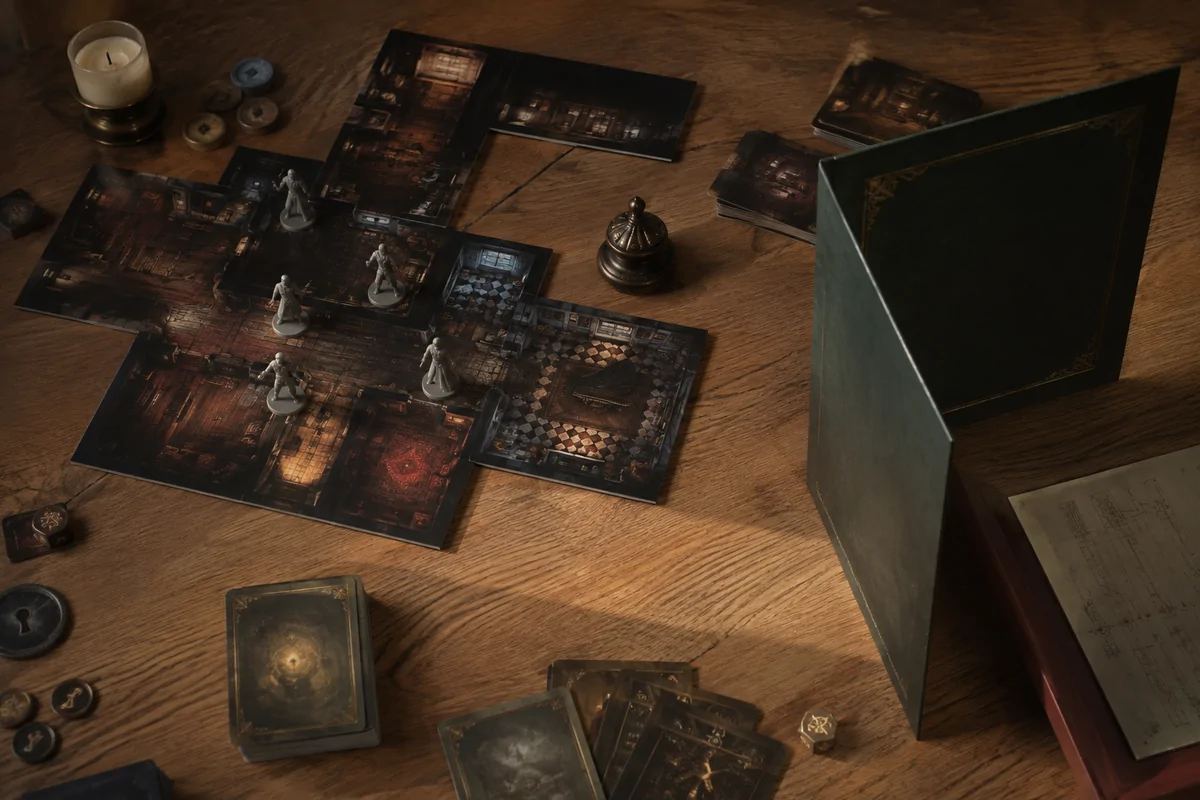
Betrayal at House on the Hill begins with players exploring a house built from tiles, but the experience is designed to shift when a haunt begins. Hasbro and Avalon Hill’s third-edition instructions describe the cooperative exploration and the scenario transition that follows. Before the haunt, players share a broad purpose: investigate rooms, gather information, and explore an uncertain layout. After the transition, the goals and player relationships can change. The same house remains on the table, yet its meaning is reframed by a new set of instructions.
That change is a notable design event because it alters how players interpret earlier actions. A room explored for its apparent usefulness may become central to the new objective. An item gathered during cooperation may matter in an unexpected way. The rules do not erase the first half of play; they reinterpret it. This creates a strong narrative feeling without requiring a prewritten story that every group experiences identically. The layout and the transition work together to produce a scenario that feels discovered rather than simply presented.
A transition needs a clear procedure
The moment a haunt begins can be exciting, but a dramatic reveal only works if players understand what to do next. The instructions tell the group how to determine the haunt and locate the matching scenario information. Players then need to read the relevant roles, objectives, and setup details carefully. The transition may divide responsibilities or introduce a traitor, depending on the scenario. The exact procedures vary, so the current third-edition instructions and haunt materials should be treated as the source rather than an older edition’s summary.
A host can protect the reveal by separating the steps. First resolve the trigger using the rules. Then have the appropriate players read their instructions privately if the scenario calls for it. Next, make sure everyone understands the new objective and any setup changes before continuing. This deliberate pause keeps the table from mixing the old cooperative assumptions with the new competitive ones. It also gives less experienced players time to absorb a potentially large rules change without losing the dramatic moment that makes the game memorable.
The house becomes a scenario map
Tile placement means the house is not a fixed board with a single strategic geography. Its layout emerges through exploration, creating corridors and rooms that later shape the haunt. The board can be open or awkward, connected or fragmented, depending on how tiles are drawn and placed. When objectives change, the physical space immediately offers a new tactical problem. Players must figure out how to reach a location, protect an area, or escape through a route that their earlier exploration helped create.
This links spatial design to narrative pacing. Exploration expands possibility; the haunt focuses it. A room that once existed as one tile in a growing mansion can become the center of a specific objective. The board’s history is visible, so players can remember how they arrived at the current predicament. The design does not need every group to encounter the same map. Instead, the shared procedure lets each group build a different stage and then discover what that stage means when the rules shift.
Asymmetry asks players to learn new expectations
When a haunt creates different roles, the table must update its social contract. Players who were cooperating may now have competing objectives, and information may become uneven. The game’s instructions define what each role knows and can do. Participants should respect those boundaries rather than sharing private text automatically. This can feel strange in a group accustomed to full cooperation, so it helps to state clearly when the transition takes effect and what each player is allowed to discuss.
Asymmetry also puts pressure on balance and clarity. A traitor’s instructions need to be understandable enough to guide play, while other players need a meaningful goal without knowing every hidden detail. If someone is uncertain, pause and check the scenario text rather than improvising a major rule. The transition’s surprise should come from new information and changed objectives, not from ambiguity about who is allowed to do what. A well-run reveal leaves the group curious about the scenario while keeping its procedure fair.
Debrief how the reveal changed the map
After the haunt, revisit the transition. Which earlier choices became important, and which rooms changed meaning? Did the new objective make the house’s layout easy to use, or did it create an interesting constraint? These questions focus on design rather than on who won. They help players see how the game connected exploration to scenario structure. Because the instructions are scenario-specific, use the official materials when resolving details and avoid generalizing one haunt’s rules to every other one.
Betrayal’s haunt transition is a compact example of rules changing the meaning of a shared space. The house grows through exploration, then a scenario reframes its rooms, roles, and goals. Hasbro’s third-edition instructions are the source for the current procedure described here; other editions should be checked separately. The design lesson is that a transition can create narrative surprise when it has a clear operational path. Players can experience a sudden shift in allegiance and objective because the rules tell them how to make that shift together.