Study section
Design Histories
Games as durable objects: traditions, revisions, and the institutions that preserve their rules.
 Design Histories
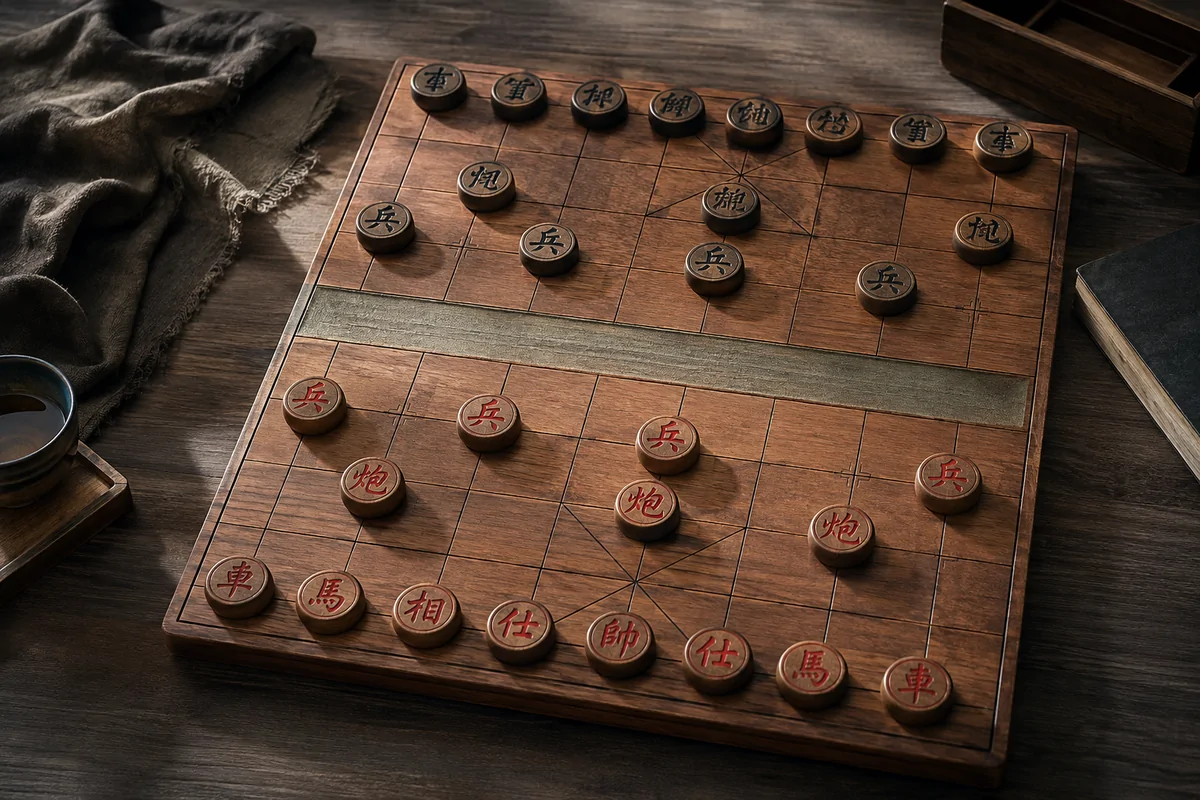
Xiangqi: The River, the Palace, and a Map Built into the Board
Xiangqi places terrain inside its geometry: the river and palace make the board read like a diagram of constrained movement.
 Design Histories
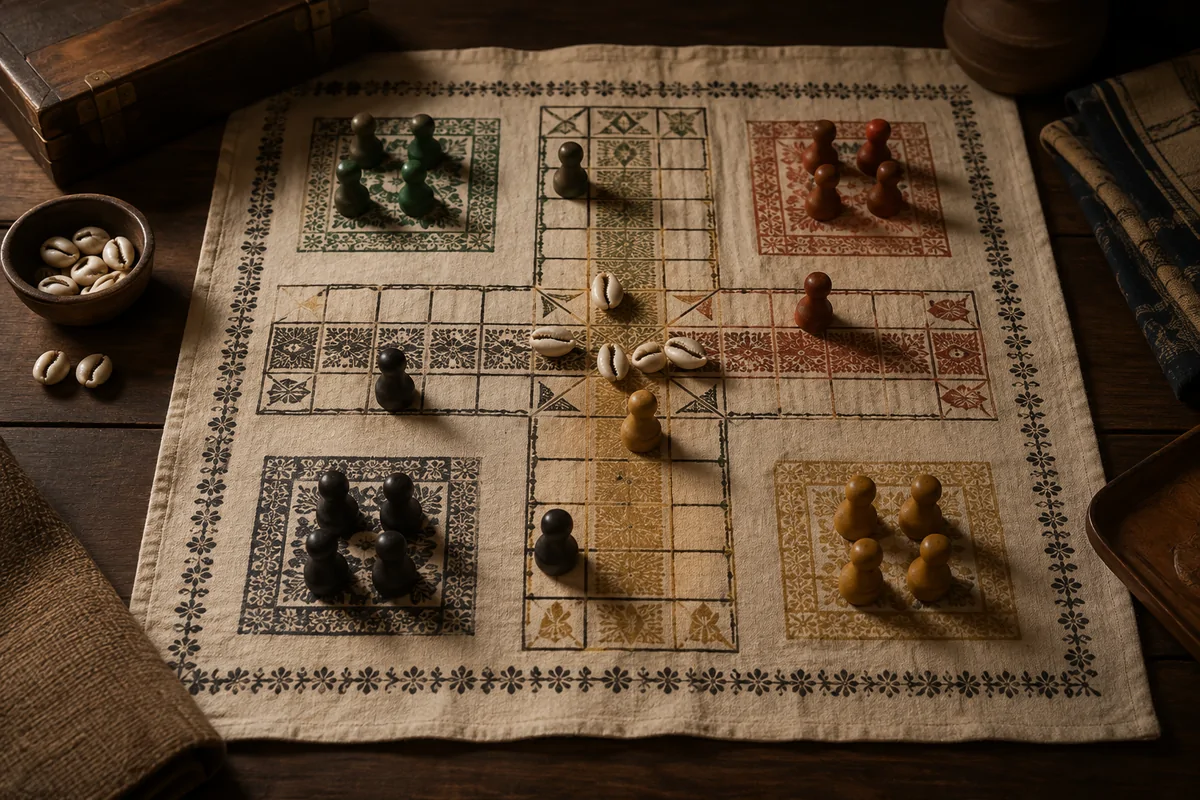
Pachisi: The Cross Board as a Journey Map
Pachisi makes a route visible as a cross-shaped field, with shared lanes and protected stops giving the journey its social texture.
 Design Histories
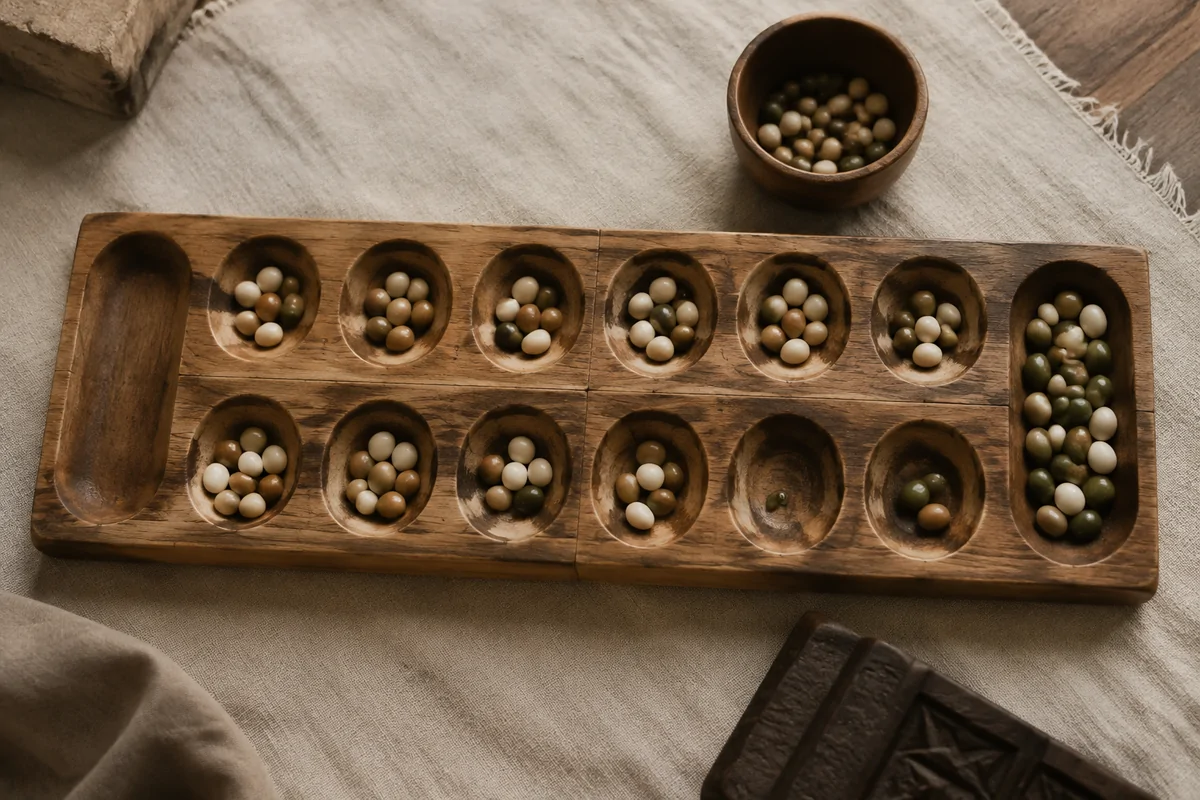
Mancala: Counting as Architecture
Mancala families turn rows of pits and movable seeds into an architecture for counting, anticipation, and capture.
 Design Histories
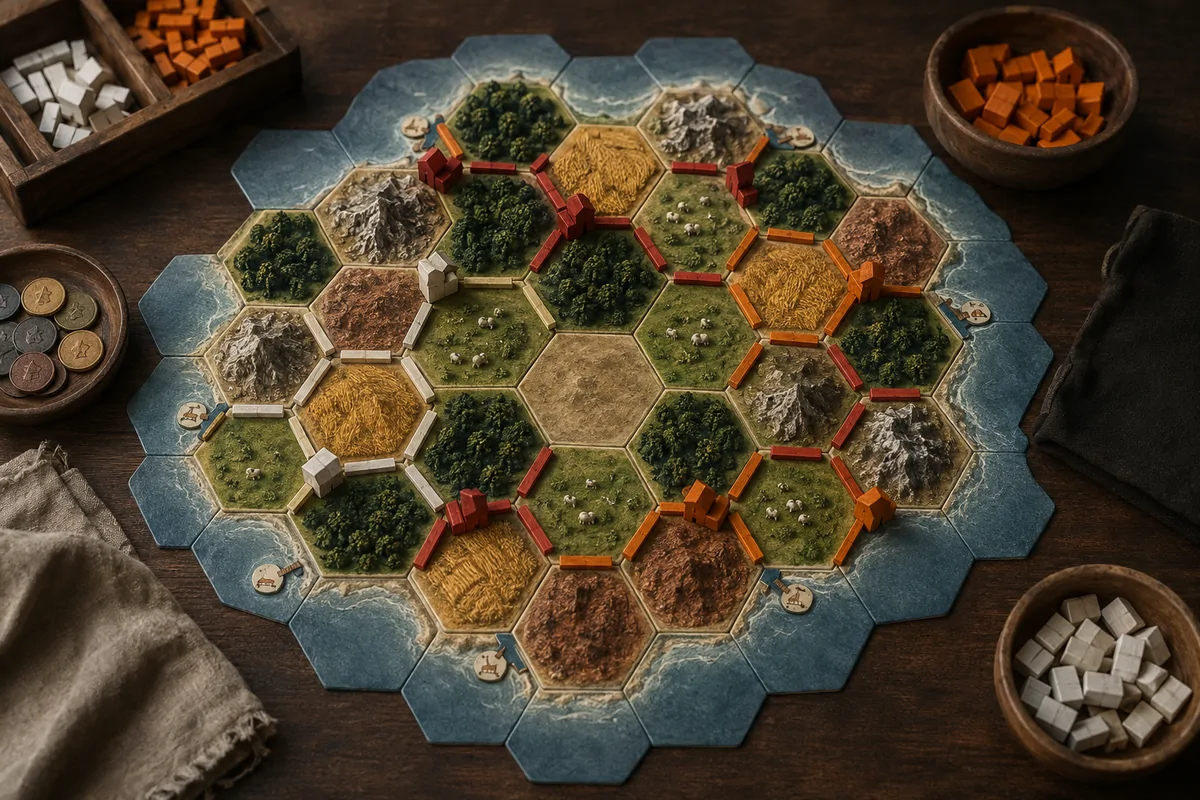
Catan: An Island Built from Networks
Catan makes settlement placement a problem of adjacency: resource hexes, ports, roads, and rivals form a changing local network.
 Design Histories
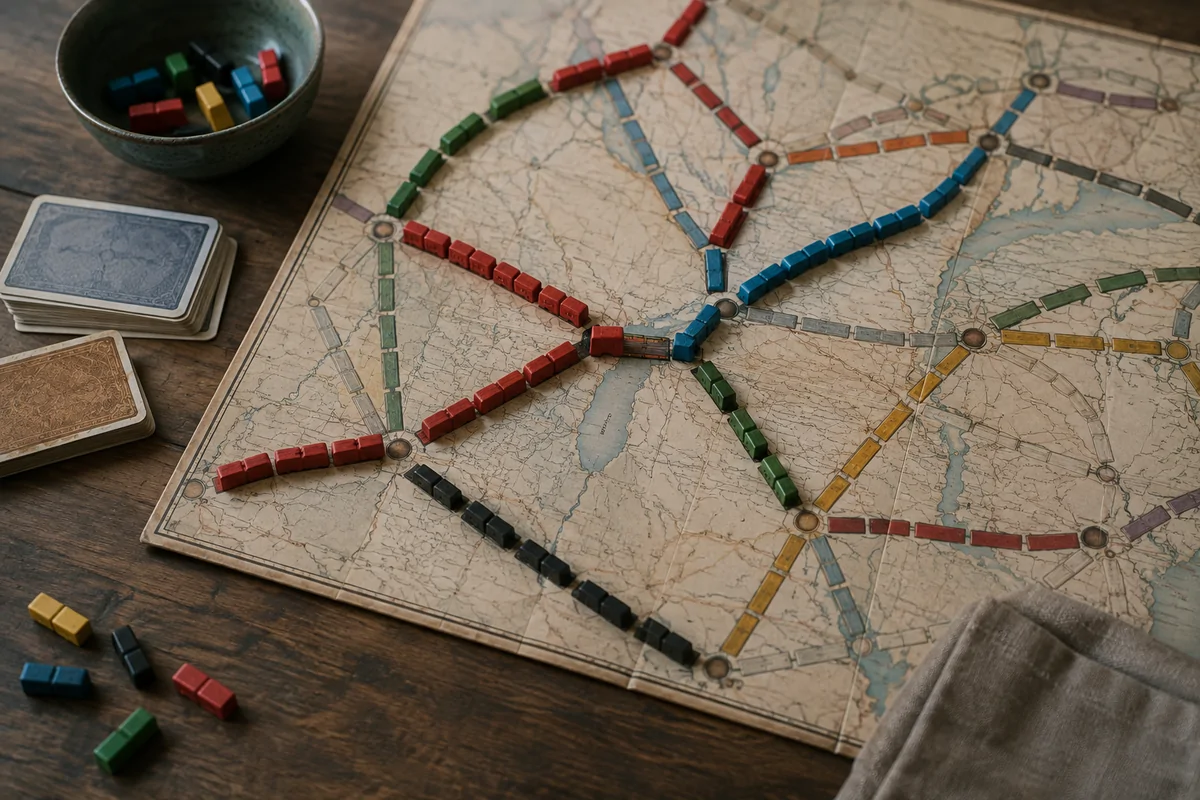
Ticket to Ride: Route Claims and the Geography of Commitment
Ticket to Ride turns a map into a sequence of commitments, where collecting colors and claiming track reveal different ideas of timing.
 Design Histories
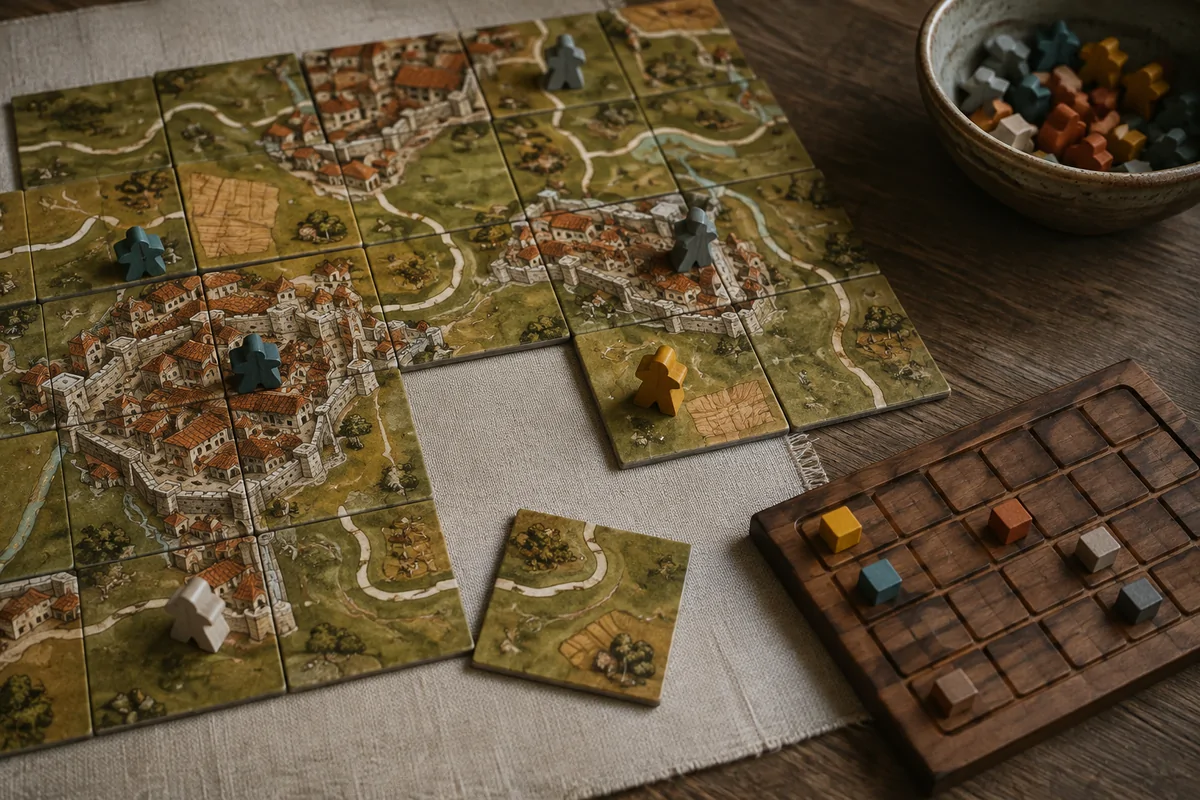
Carcassonne: A Landscape That Is Also a Score Sheet
Carcassonne’s tiles make geography accumulate in public: every road, city, field, and follower changes what later placements can mean.
 Design Histories
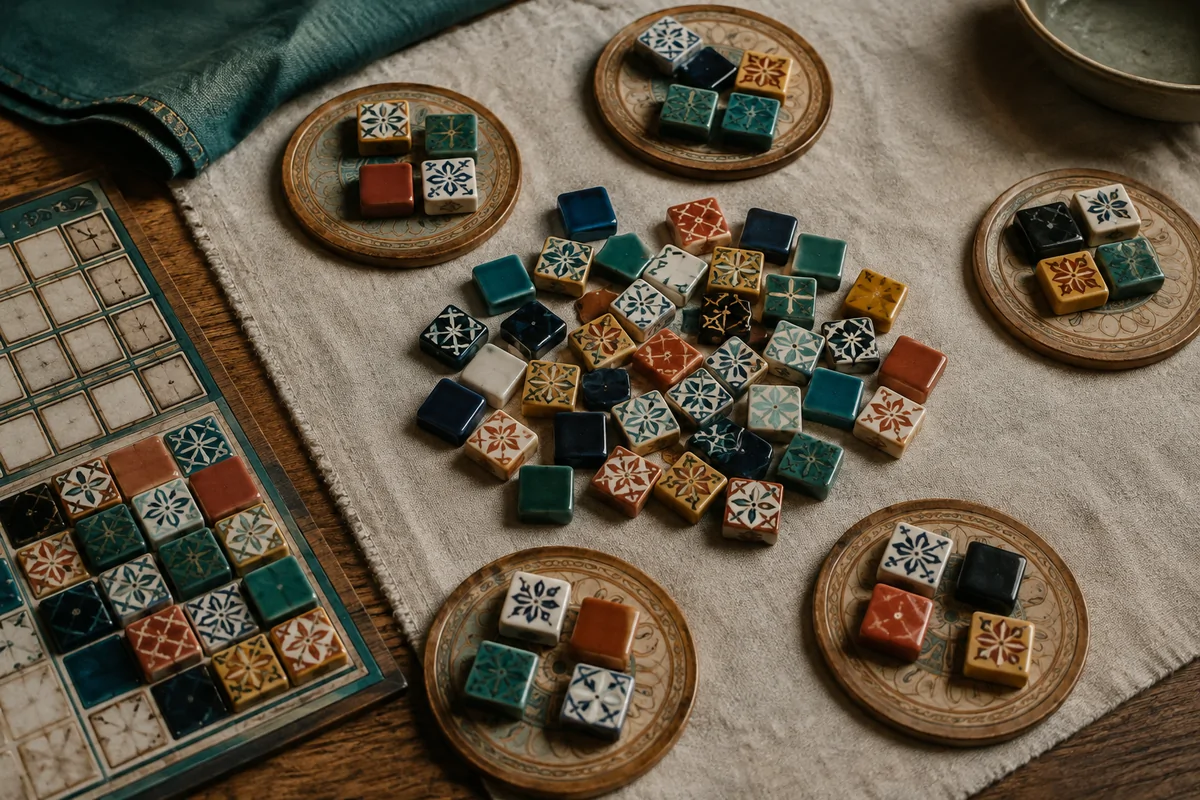
Azul: Pattern, Scarcity, and the Drafting Circle
Azul uses a simple factory display to make every tile color feel social: taking one color sends the rest into a shared middle.
 Design Histories
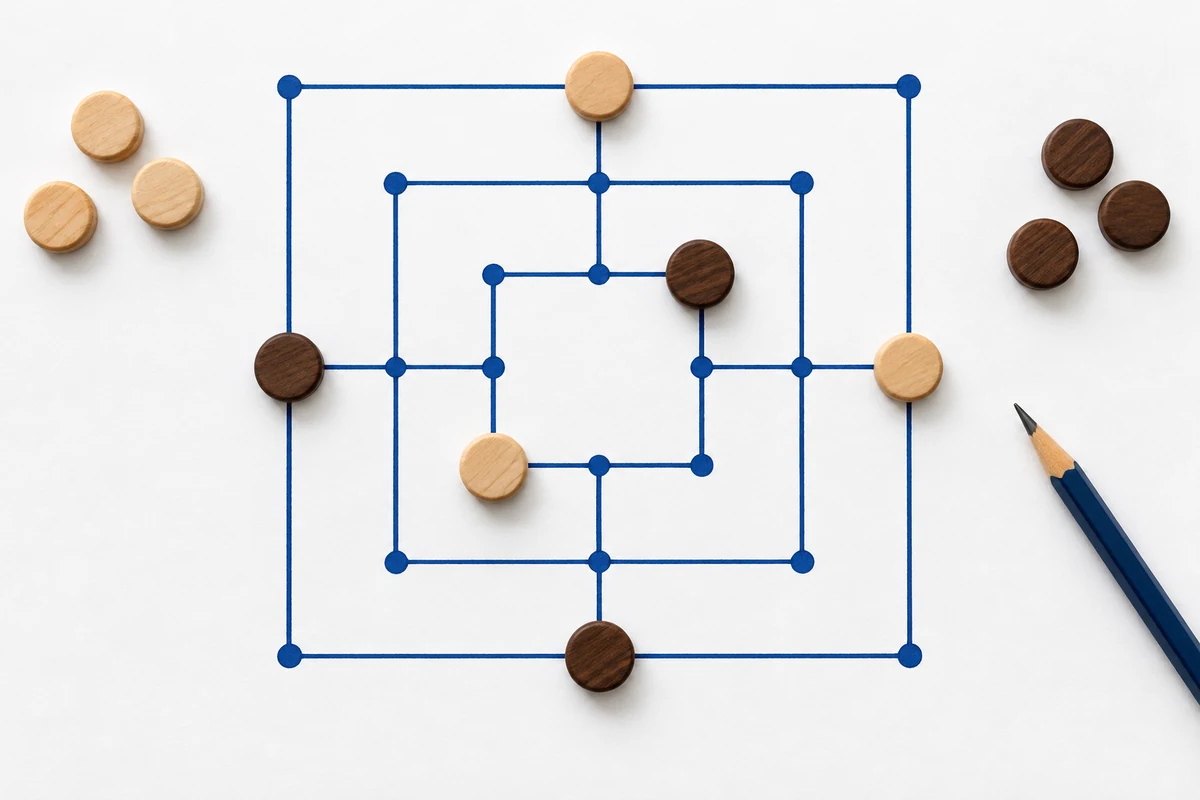
Nine Men’s Morris: From Stone Board to Playable Diagram
Nine Men’s Morris links archaeological traces of carved boards with a modern playable diagram, while the surviving surface cannot answer every historical question.
 Design Histories
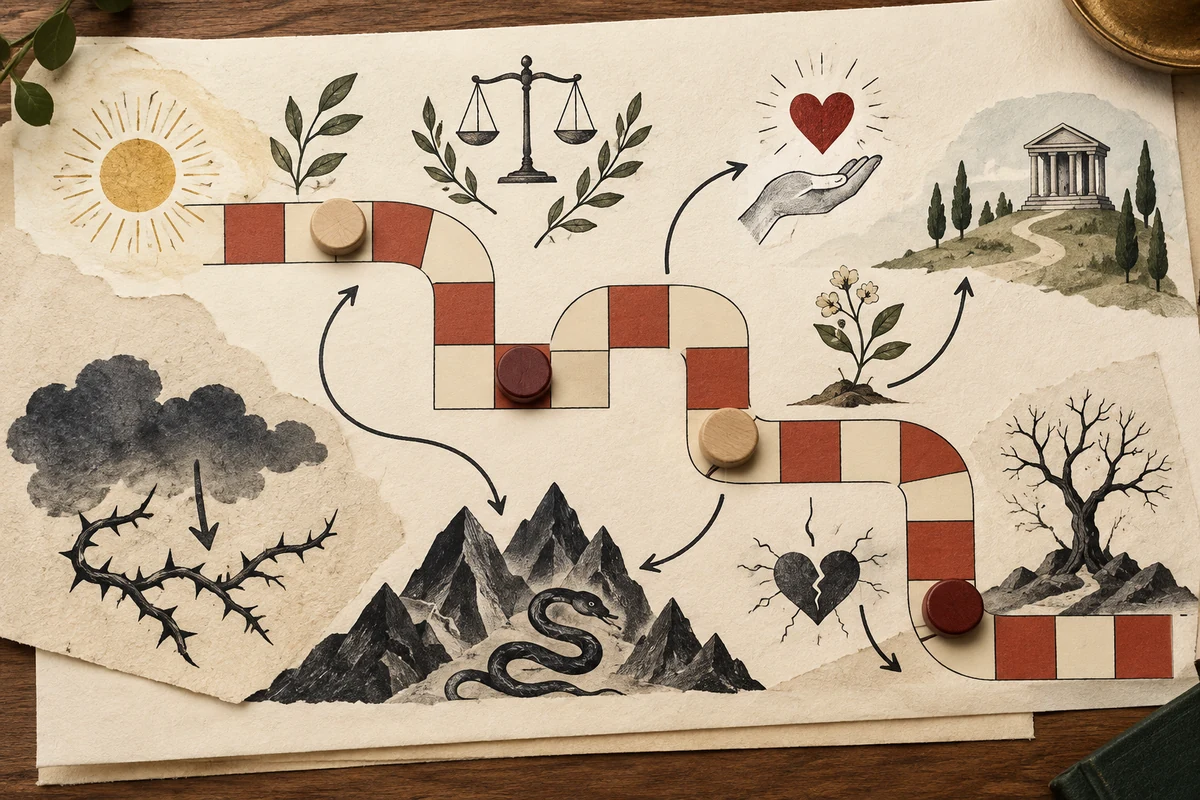
The Checkered Game of Life: A Different Destination
The Checkered Game of Life used a moralized checkerboard path, making it a distinct nineteenth-century game rather than an early copy of the modern Game of Life.