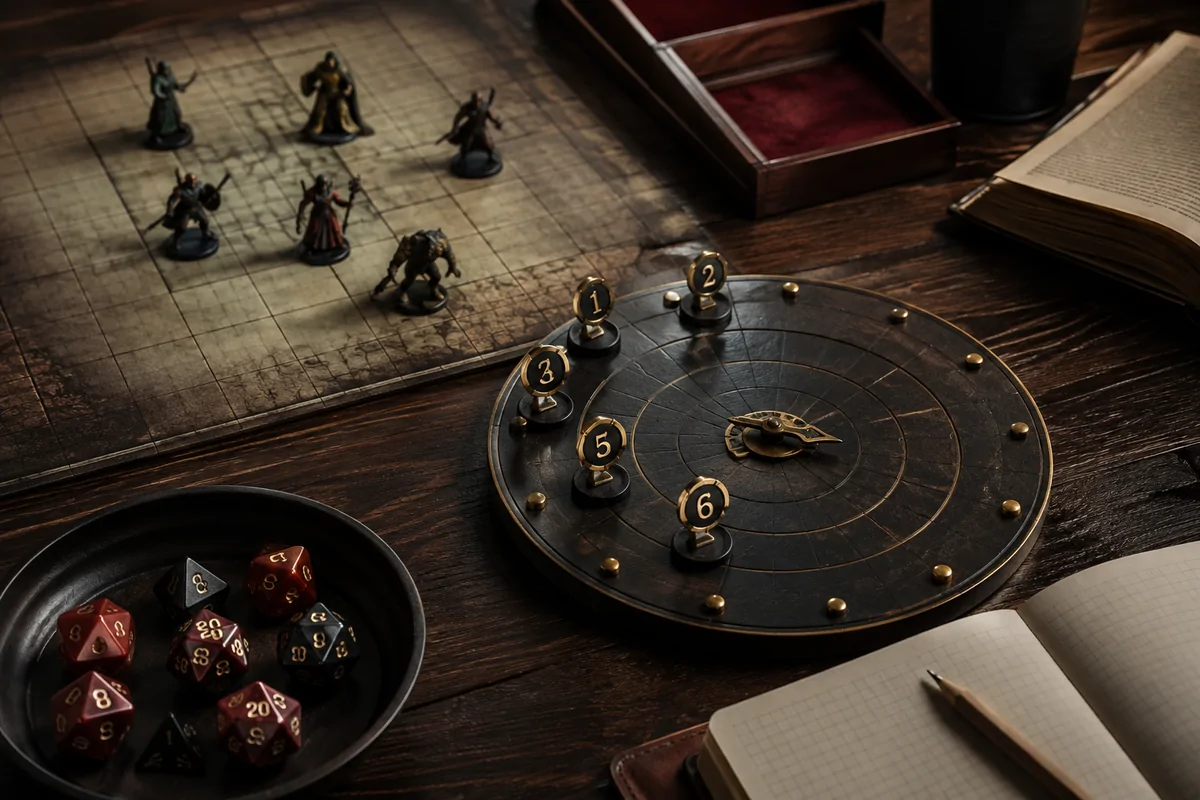
A turn is a shared clock for imagination
In Dungeons & Dragons, combat turns organize a situation that might otherwise be narrated all at once. The 2024 Basic Rules describe initiative, movement, actions, bonus actions, and reactions as parts of structured play. A turn does not make the fiction less imaginative; it gives everyone a predictable moment to declare what a character attempts. One player’s action can change the scene, and the next player can respond to the new situation. The turn is a social clock that shares attention across a group rather than letting the fastest speaker control every moment.
The clock also creates a boundary between what a character could do in the fiction and what the rules allow during a turn. A player may imagine many actions, but the game allocates specific resources and timing windows. The rules give the table a way to compare those intentions. A teacher should distinguish movement from an action and explain how reactions occur, using the current edition’s terms. Earlier versions may use different wording or procedures. Edition labels matter because familiar names can hide meaningful changes in how a turn is structured.
Initiative creates an order, not a script
Initiative establishes the order in which participants take turns during combat. That order helps resolve simultaneous plans into a sequence the group can follow. It does not dictate what a character must do. A player still chooses whether to move, act, speak, assist, defend, or attempt something shaped by the situation and the rules. Initiative creates a dependable rhythm; players supply the content. This distinction keeps the mechanic from being misunderstood as a narrative ranking of importance or as a prediction of who is most likely to succeed.
The order can make a plan more or less viable. An ally who acts earlier may create an opening, while an enemy who acts first can change the map. Players can coordinate by describing intentions, but they should also be ready to revise when the order produces an unexpected state. The turn sequence is a shared clock because it lets the group know when an action can happen and what has changed before the next action. Its value is not only fairness. It preserves continuity in a scene with many possible agents.
Action categories help players allocate attention
The 2024 rules use categories such as actions, bonus actions, and reactions to describe what a creature can do and when. These terms help structure a turn, but a new player can mistake them for a checklist that must be filled every round. They are better taught as permissions and timing constraints. The player should first describe an intention in ordinary language, then identify which rule category applies. This keeps the story present while making the mechanical cost visible. It also allows the table to notice when an action depends on a specific feature or spell.
The categories distribute attention among players. When one player uses a reaction outside their own turn, the group briefly shifts focus without losing the larger order. This is a small but important design choice. It gives participants a way to respond to unfolding events while preserving the initiative sequence. The 2024 Basic Rules explain the timing; a campaign may add table conventions for keeping track of reactions. Those conventions should support clarity without changing the written rules silently. A visible reminder can help everyone know which options remain available.
The map and the turn share the workload
Many groups use a grid or miniatures to make positions and distances visible, while others resolve combat in theatre of the mind. The rules framework can support different presentation choices, but the group should agree how it will judge distance and movement. A physical map externalizes spatial information; narrative description externalizes it through repeated language. Either way, the turn must connect movement to what a character can reach, protect, or leave exposed. The facilitator’s job is to keep those facts consistent enough that players can make informed choices.
This is where a turn becomes a tool for inclusion. Some players process a scene visually, others verbally, and others need a moment to compare options. A predictable order provides space for each person to contribute. The group can summarize the current threat, identify a character’s location, and invite a decision without demanding an immediate response. D&D’s rules do not prescribe a single social style for every table. Hosts can use the turn structure to share attention deliberately while still respecting each player’s control over their character.
Teach one complete turn and one response
A useful introduction demonstrates a full turn from initiative through movement and action, then shows how a reaction can occur when its trigger is met under the current rules. Use a simple situation with a visible choice and avoid introducing every spell or feature at once. After the example, ask the learner what information changed for the next character. This confirms that they understand both the turn’s permissions and its effect on the shared scene. The lesson is more durable when it follows a concrete event than when it lists terms without context.
The D&D turn makes a collaborative story playable by giving it an order and a budget of actions. The 2024 Basic Rules are the source for the edition-specific procedures described here; other editions should be checked separately. The broader design lesson is that a clock can support imagination when it protects everyone’s opportunity to act. Clear timing lets players focus on intent, consequence, and teamwork rather than on who spoke first. A turn does not decide the story. It gives the group a fair structure for deciding what happens next.