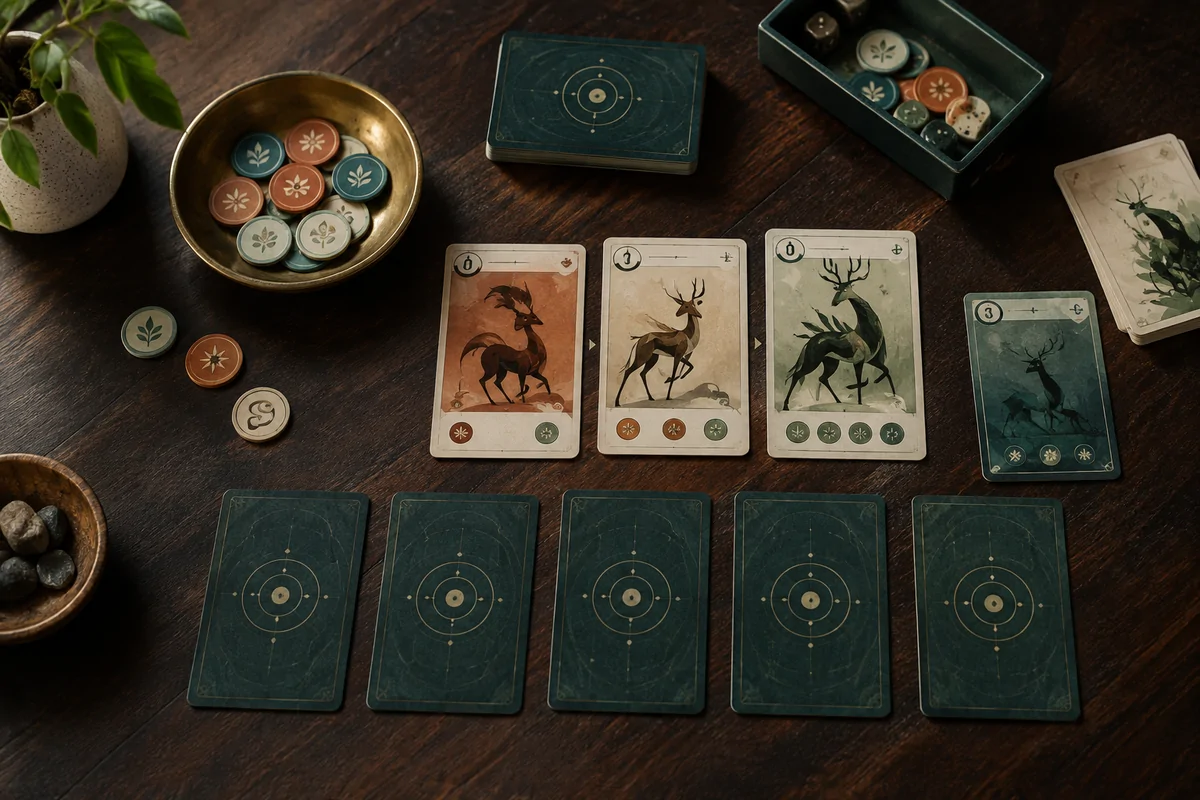
Prize cards make progress easy to count
In the Pokémon Trading Card Game, Prize cards provide a visible progress track tied to Knocked Out Pokémon. The official glossary explains the Prize concept and how a player takes a Prize when an opponent’s Pokémon is Knocked Out. That connection gives a match a clear tempo signal: a player can look at the remaining Prize cards and see how close the game is to its endpoint. The exact number, setup, and current card rules should be checked in the official rulebook for the edition being played, since products and card text change over time.
The progress marker is useful because it links a dramatic event to a concrete change in the shared state. A Pokémon being Knocked Out does not merely remove a card from the field; it can advance a player toward winning through the Prize system. This makes target selection a question about pace as well as board strength. A player may ask whether taking down a large Pokémon changes the race more than removing a smaller threat. The answer depends on current cards and rules, but the design makes the question visible to both sides.
Tempo is the value of acting at the right moment
Players often use the word tempo to describe whether they are advancing their plan faster than the opponent. In the TCG, tempo can arise from several interactions: preparing a Pokémon, attaching resources, evolving, disrupting an opponent’s setup, or taking Prizes. This article does not prescribe one universal turn sequence because exact options depend on the current rulebook and the cards in play. Instead, it treats tempo as a way to compare what each player gains now with what they allow the other side to do next.
That comparison prevents a narrow focus on immediate damage. A high-damage attack may be less valuable if it leaves the player unable to respond to the opponent’s next threat. A setup action may look quiet but create a stronger future turn. Prize progress can change the urgency of either choice. The public count gives context, while the hands and deck introduce hidden information. A good player reads both: what has already been accomplished and what could become possible after the next draw. The game’s pace is a relationship between visible progress and uncertain preparation.
The bench broadens the decision space
Active and Benched Pokémon create a field of current and future options. The active position may receive attacks or effects, while the bench can hold developing threats or support pieces, as permitted by the current rules. A player who focuses only on the active card can miss how the wider board is being prepared. Conversely, filling the bench without a clear plan may consume opportunities or expose resources to effects. The board is a formation rather than a single duel, and players need to assess how a current target relates to what is waiting behind it.
This broader reading makes sequencing important. A player may need to prepare a replacement before the active Pokémon becomes vulnerable, or decide whether to invest in an evolution line before taking another action. These choices are tied to specific card text, so players should consult the rulebook and card wording rather than rely on a generalized memory. For teaching, explain the field first: which Pokémon is active, which are on the bench, and what each could plausibly do. Then connect a Prize opportunity to the state of that whole formation.
Card text creates a changing local ruleset
Every match combines a base rulebook with the effects printed on the cards. The rulebook gives the structure; card text modifies particular situations. That means a familiar tempo question can have a different answer when a card changes costs, targets, or timing. The official glossary helps clarify shared terms, but it is not a substitute for reading the current card text and rulebook. Players should keep the relevant card visible during a complex interaction so everyone can verify the wording. This habit makes the game fairer and reduces reliance on whichever player remembers an older ruling.
The distinction also helps readers avoid overgeneralizing from a single card or competitive format. A strategy article about a particular deck may be time-sensitive, while the basic idea of Prize progress is more stable. This study focuses on the design relationship, not a current metagame recommendation. When facts depend on a release, rotation, or official ruling, name the format and date and consult the current Pokémon support materials. A stable explanation should tell readers which part of the game is a persistent structure and which part depends on the changing card pool.
Review the race after each Knock Out
After a Knock Out, pause and ask how the Prize count changed, what left the board, and which player now has the initiative to develop the next threat. This small review connects a card event to the match’s overall pace. It also makes tactical conversation more specific than simply celebrating a large attack. A player can explain whether the Knock Out advanced a winning plan, interrupted the opponent, or created a new weakness. The same result may do several things at once, so the group benefits from naming each consequence separately.
Prize cards give the Pokémon TCG a visible clock inside a match built from changing cards and evolving boards. They help players recognize progress, but they do not alone explain who is ahead or which play is strongest. The official glossary supports the core definition; current rules and card texts govern each edition and format. The design lesson is that a clear progress marker can make tempo discussable. It lets players connect a local event to the match’s endpoint, then decide whether speed, preparation, or disruption matters most in the current state.