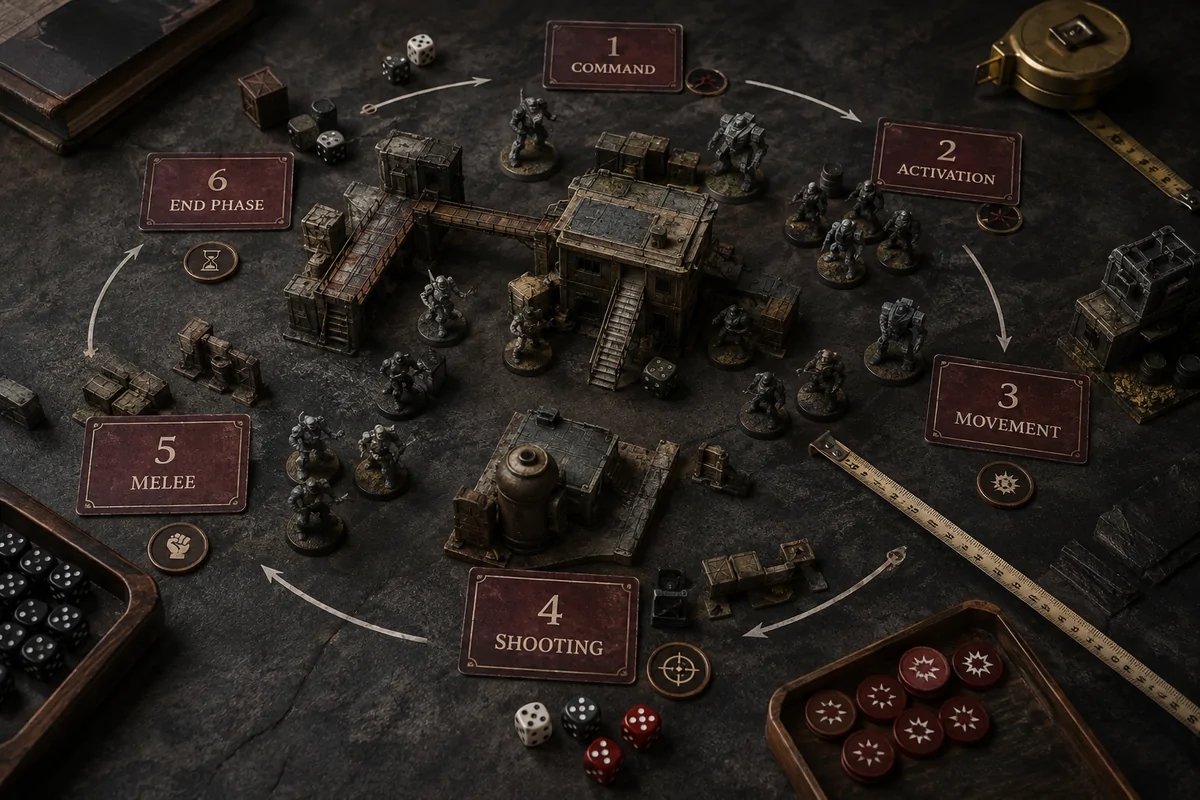
A turn sequence is a shared script
Warhammer 40,000 uses a turn structure to coordinate movement, attacks, and other actions across a table covered with models and terrain. Games Workshop’s current downloads page is the source for the edition-specific core rules. The sequence is not simply administrative overhead. It is a shared script that tells both players which kinds of decisions are active and when a unit can affect the battlefield. In a game with many models and interactions, a named phase can prevent two people from resolving different assumptions at the same time.
The phase structure also shapes attention. At one point, players may focus on where units can move; later, they consider line of sight, targets, or close engagements according to the selected edition. A player who understands the current phase can anticipate what options are about to open or close. This makes turn order part of strategy. A unit’s position is evaluated not only by what it threatens now but by what it can reach in a later phase and what an opponent may do in the meantime.
Sequence helps a dense table stay legible
Miniature games place many objects into a shared physical space. Models, terrain, measuring tools, objective markers, and dice all carry information. If players resolve actions out of order, the board becomes difficult to audit: a unit may move before a relevant ability is checked, or a target may be chosen without the right timing. The phase sequence divides this complexity into manageable windows. It lets the players inspect one kind of state change at a time and confirm that both sides are ready before moving forward.
That benefit depends on using the same edition and rules reference. Warhammer 40,000 has multiple editions and frequent updates, so remembered phase names or procedures can become stale. The official download page should be consulted for the current documents in use, and the players should agree which update or event rules govern the match. A phase chart from an older edition might look familiar while quietly changing an important step. Clear versioning is not bureaucracy; it protects the shared script from drifting between players.
Measuring turns space into a common fact
Movement and range often require measurement on the table. Measuring tools turn a visual estimate into a value that both players can check. This changes how players discuss distance: instead of arguing that a model “looks close enough,” they can point to a defined measurement under the current rules. Terrain and model placement still require care, and the edition’s line-of-sight and movement rules determine what that distance means. The measuring tool is a component of fairness because it externalizes a fact that would otherwise depend on perspective.
Measurement also changes planning. A unit placed near an objective might be able to contest it, threaten another unit, or remain protected by terrain, depending on the exact layout. Players can evaluate the likely sequence of actions before committing movement. A host can help by keeping the table uncluttered and allowing both players to inspect a measurement. The point is not to remove tactical surprise. It is to make the conditions of surprise shared, so that a player loses because of an opponent’s decision rather than an invisible difference in how distance was judged.
Objectives give the sequence a purpose
The turn phases are not an end in themselves. Objectives and mission rules give movement and combat a reason to matter. A player may win by controlling or contesting locations over time, depending on the mission and edition. That means a dramatic attack is not automatically more valuable than a quiet move that changes objective control. The current mission pack and core rules define the scoring procedure. A careful player reads the mission before deployment and asks how the sequence of actions can create or preserve score opportunities.
This connection helps keep a large game from becoming a collection of isolated duels. Units operate in a broader plan, and a turn can be judged by how it changes the mission state. A player might accept a local loss to secure an objective or preserve a unit for a later phase. Those trades are easier to explain when the mission is visible to both sides. The shared script tells the players when actions happen; the objective tells them why those actions matter. A full table-level explanation should keep both in view.
Use a phase marker as a teaching aid
For new players, a simple marker or verbal announcement can identify the current phase and the next required step. Before an action, state which unit is acting, what target or location it concerns, and which rule makes it legal. This routine may seem deliberate, but it prevents skipped steps and gives the opponent a chance to respond. After a few turns, players can move faster because they have a common rhythm. Clarity at the start saves time later when a disputed interaction would otherwise require reconstructing the whole turn.
Warhammer 40,000’s sequence is a coordination technology for a visually dense game. The official documents change with editions and updates, so this study avoids presenting a fixed phase list as timeless. Players should use the current core rules, mission documents, and event rules that govern their match. The design lesson is that procedural order can support tactical freedom. When a table agrees on the script, players can make more complex choices while remaining confident that each model, measurement, and score change entered the game at the right time.