Tabletop Field Notes · Volume 01
Read the table
before the move.
51 source-backed studies on rules, components, game histories, and the shared craft of play.
Start with the lead study ↗New in the archive: SET: A Pattern With Rules Beneath Its Surface
Scroll to inspectThe practice desk
Put the next move in your hands.
First-session checklists, interactive positions, and 306 explained exercises across all 51 studies. Start with a rule, then learn to weigh a decision.
Three systems under glass
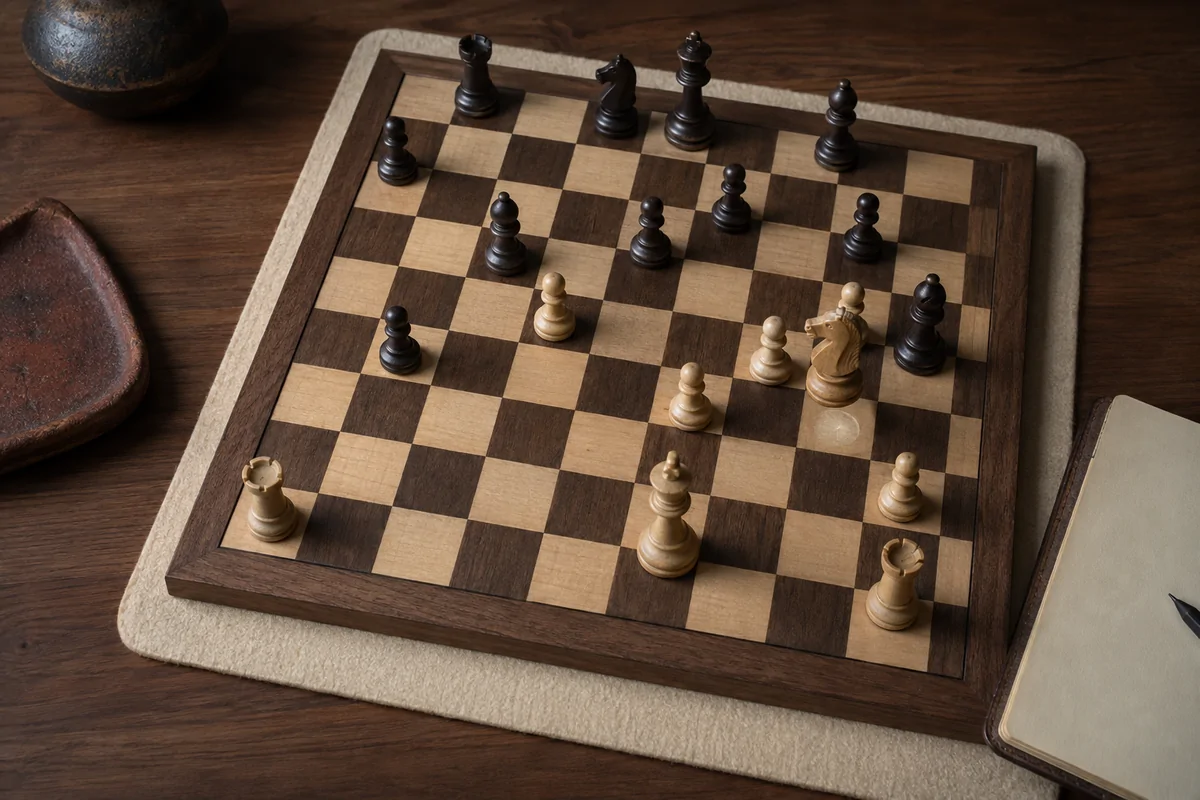
Chess: Why the Legal Move Is a Design Boundary
Chess turns an attack on the king into a tightly specified question: which moves preserve a player’s own position?
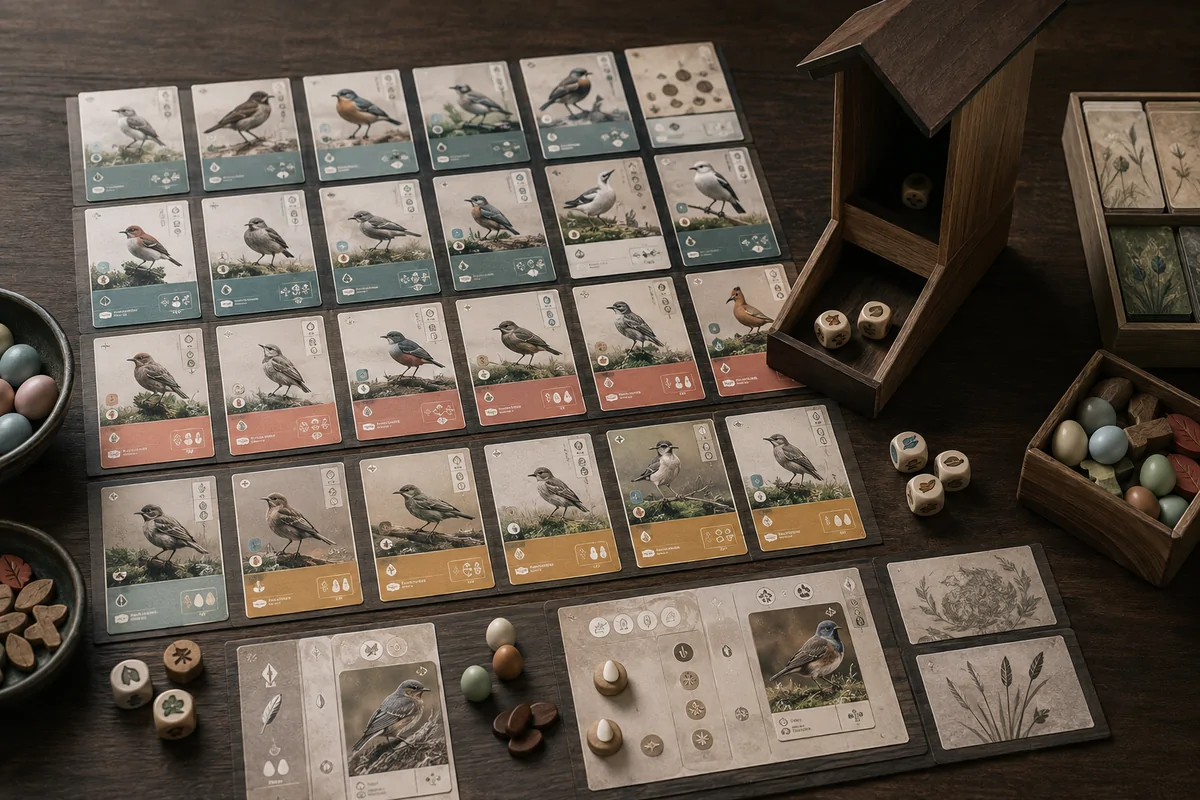
Wingspan: When an Engine Feels Like an Atlas
Wingspan joins a tableau engine to bird information, making the player board feel like both a planning tool and a field guide.
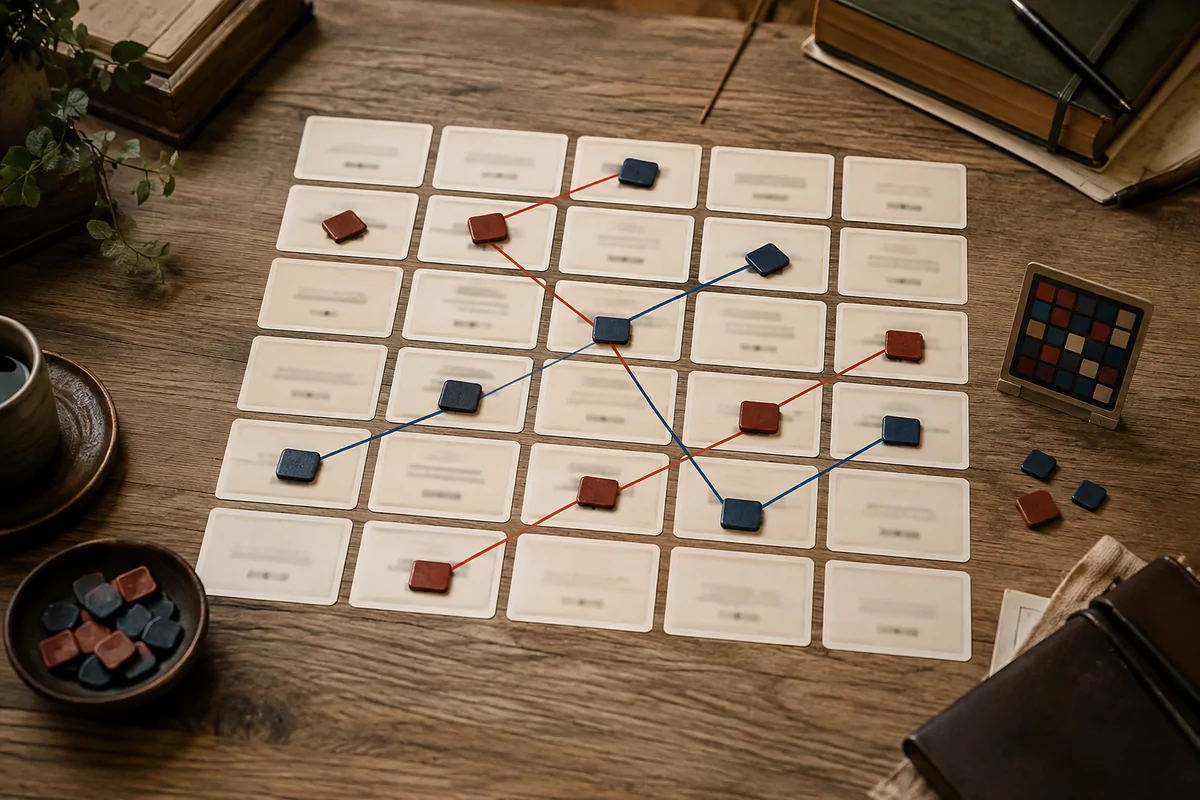
Codenames: A Clue Is a Bridge Between Private and Public Maps
Codenames asks a clue giver to connect words without saying too much, turning shared language into a calibrated design material.

Mechanics Workshop
View section →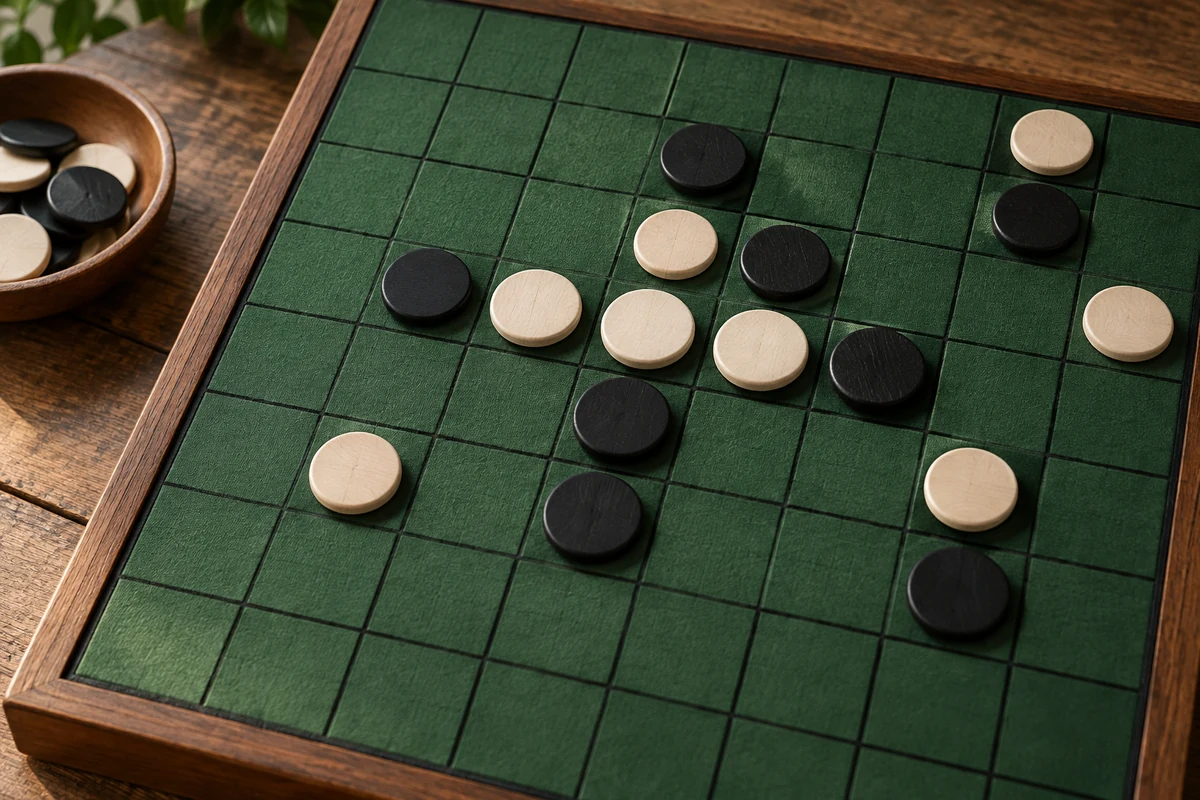 Mechanics Workshop
Othello: A Board Where the Majority Comes Last
Othello makes each placement reverse lines of discs, so the board’s visible majority can remain a poor guide to who is winning.
 Mechanics Workshop
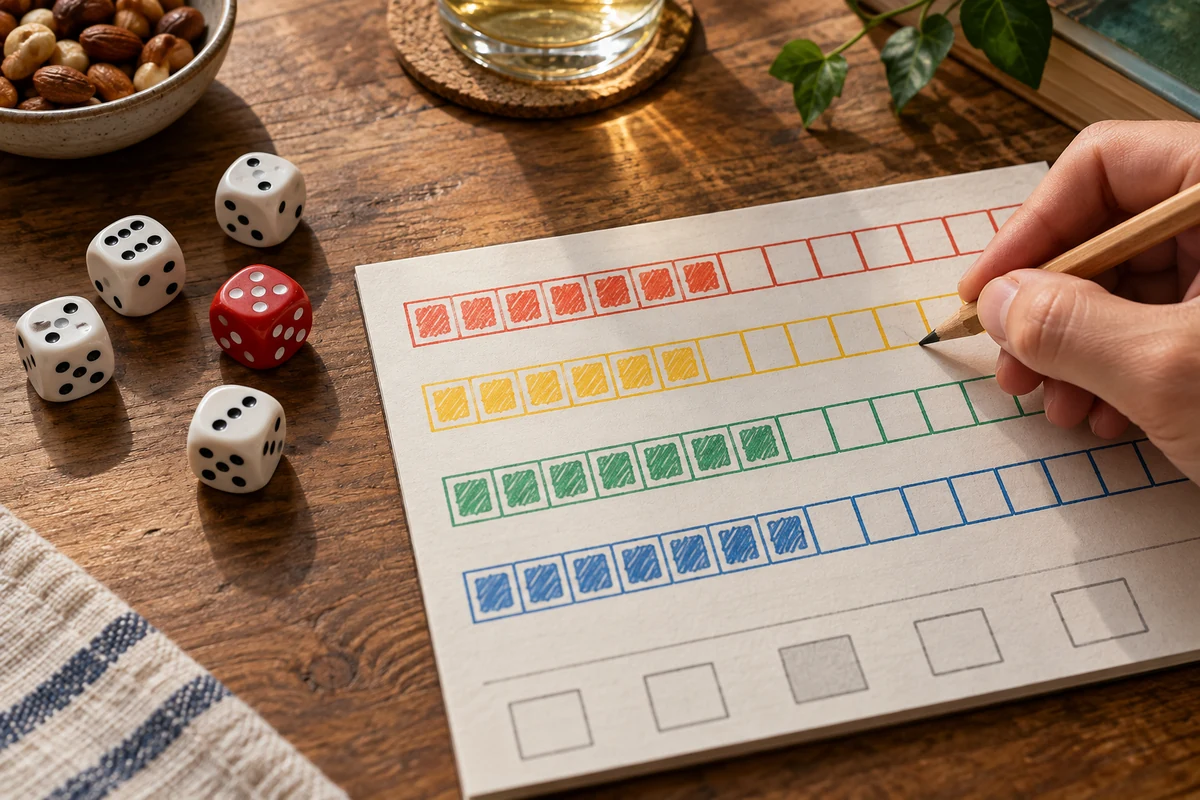
Qwixx: A Score Sheet Shared by Every Turn
Qwixx gives every player a decision during each roll, while a left-to-right score sheet makes skipped opportunities permanently visible.
 Mechanics Workshop
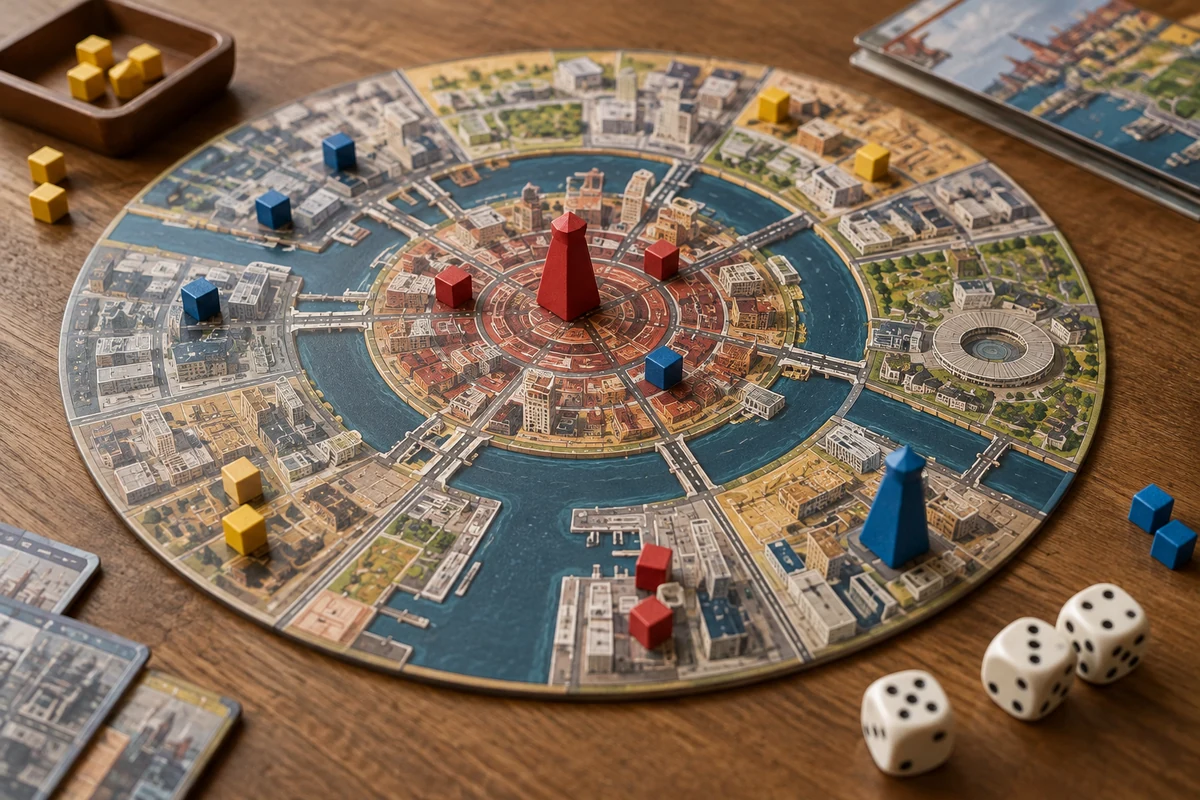
King of Tokyo: When Staying in the City Is a Choice
King of Tokyo makes occupying the city a public commitment that trades a route to victory points for exposure to attacks and limits on healing.
Field reference / 09 terms
A vocabulary for reading play.
Use this small index to find the rules, risks, and spatial ideas that recur across the archive.
9 terms shown.
01Action economy
The limited actions available within a turn or round. A game’s action economy asks players to prioritize when they cannot do everything they want.
Related study: Dungeons & Dragons: The Turn as a Social Clock02Initiative
A rule or choice that establishes who acts when. In Gloomhaven, choosing an initiative value makes timing part of the plan players commit to.
Related study: Gloomhaven: Initiative Cards and the Cost of Being Early03Legal move
An action that satisfies the game’s constraints at the moment it is taken. Chess makes this boundary explicit by ruling out moves that leave a player’s own king in check.
Related study: Chess: Why the Legal Move Is a Design Boundary04Engine building
A system in which players assemble cards, abilities, or other effects that make later turns more productive. The engine is both a plan and something that must be tested against the game’s pace.
Related study: Wingspan: When an Engine Feels Like an Atlas05Hidden information
Part of the game state is intentionally unknown to some or all players. In Netrunner, a run tests what can be inferred before the other side reveals its response.
Related study: Netrunner: A Run Is a Question Asked of Hidden Information06Shared problem
A challenge the group must manage together, with open information and shared consequences shaping how players coordinate.
Related study: Pandemic: Designing a Shared Problem07Blot
A single backgammon checker left exposed on a point. An opponent can hit it, turning a small positional choice into a visible risk.
Related study: Backgammon: The Race, the Blot, and a Board That Remembers Risk08Territory
In Go, control made legible through groups and the empty intersections they surround. The spaces between pieces can matter as much as the pieces themselves.
Related study: Go: Territory, Shape, and the Value of an Empty Point09Campaign state
Changes that persist between sessions or scenarios. Maps, cards, stickers, and outcomes let a campaign carry the consequences of earlier choices forward.
Related study: Frosthaven: Campaign State as a Record of Consequences
No terms match this search. Try another word or field.
Design Histories
View section →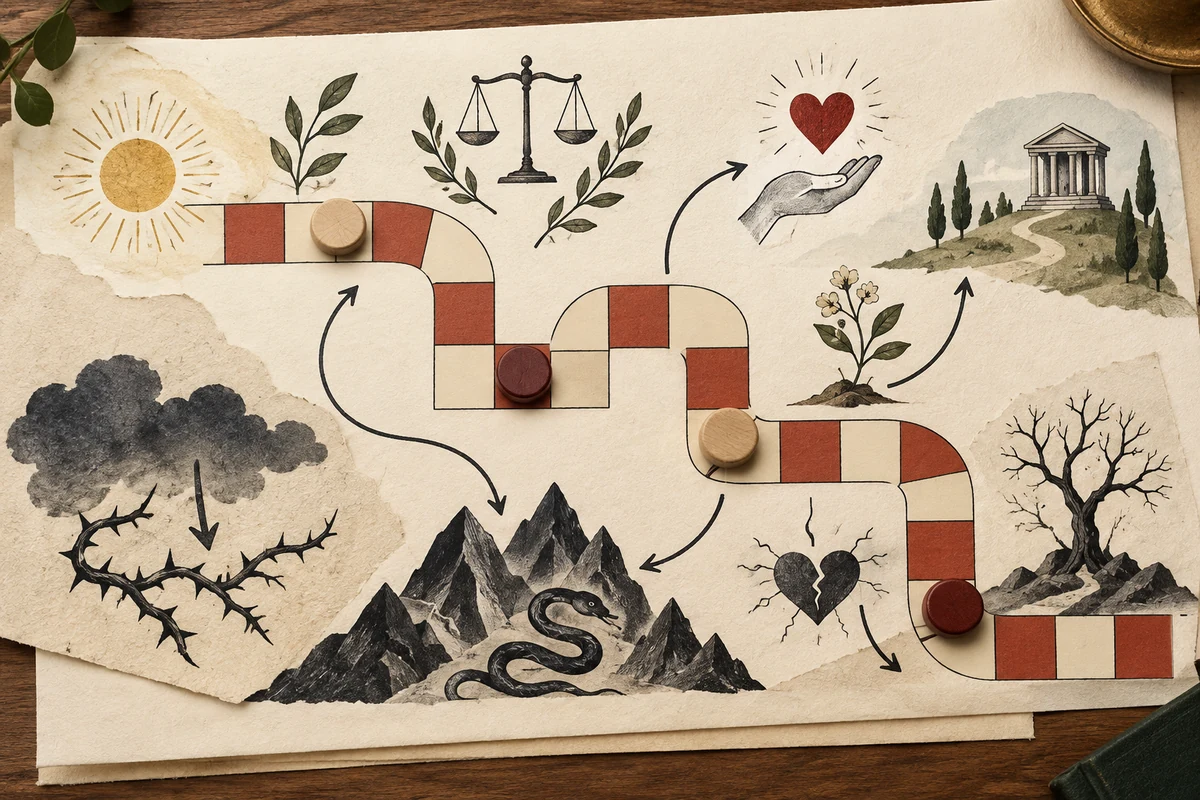 Design Histories
The Checkered Game of Life: A Different Destination
The Checkered Game of Life used a moralized checkerboard path, making it a distinct nineteenth-century game rather than an early copy of the modern Game of Life.
 Design Histories
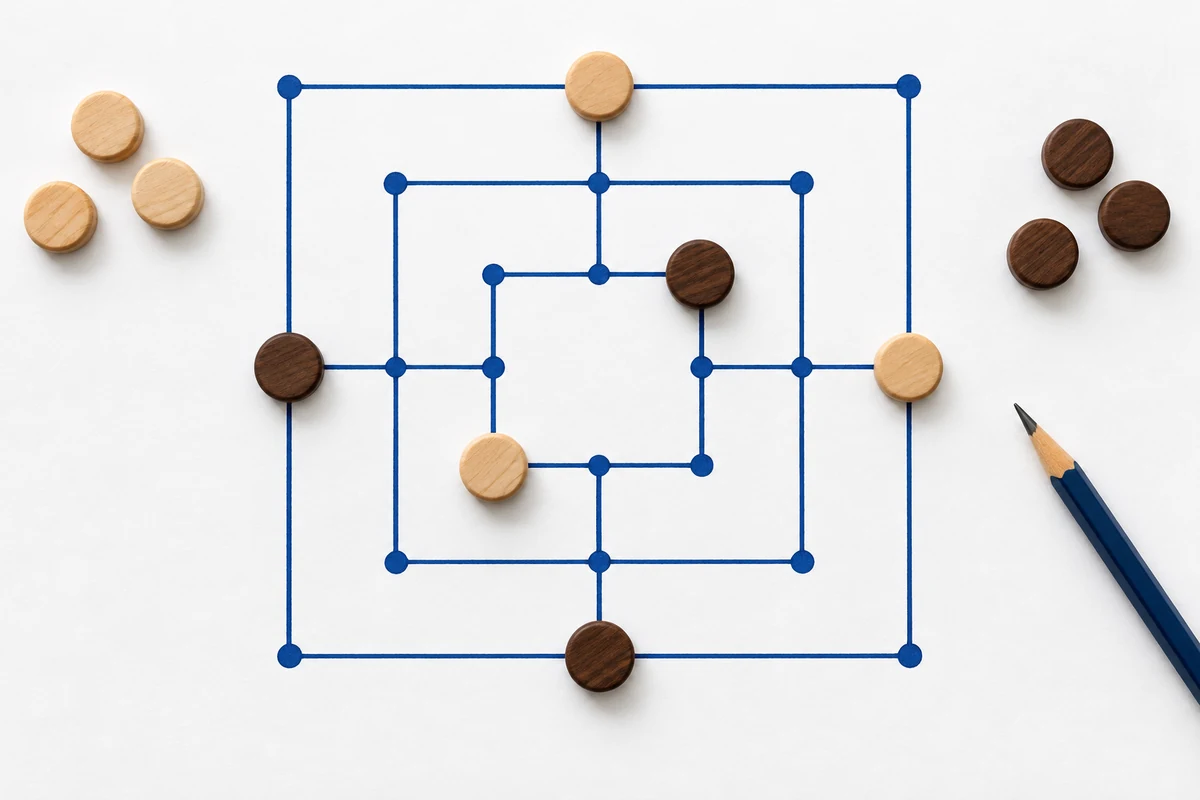
Nine Men’s Morris: From Stone Board to Playable Diagram
Nine Men’s Morris links archaeological traces of carved boards with a modern playable diagram, while the surviving surface cannot answer every historical question.
 Design Histories
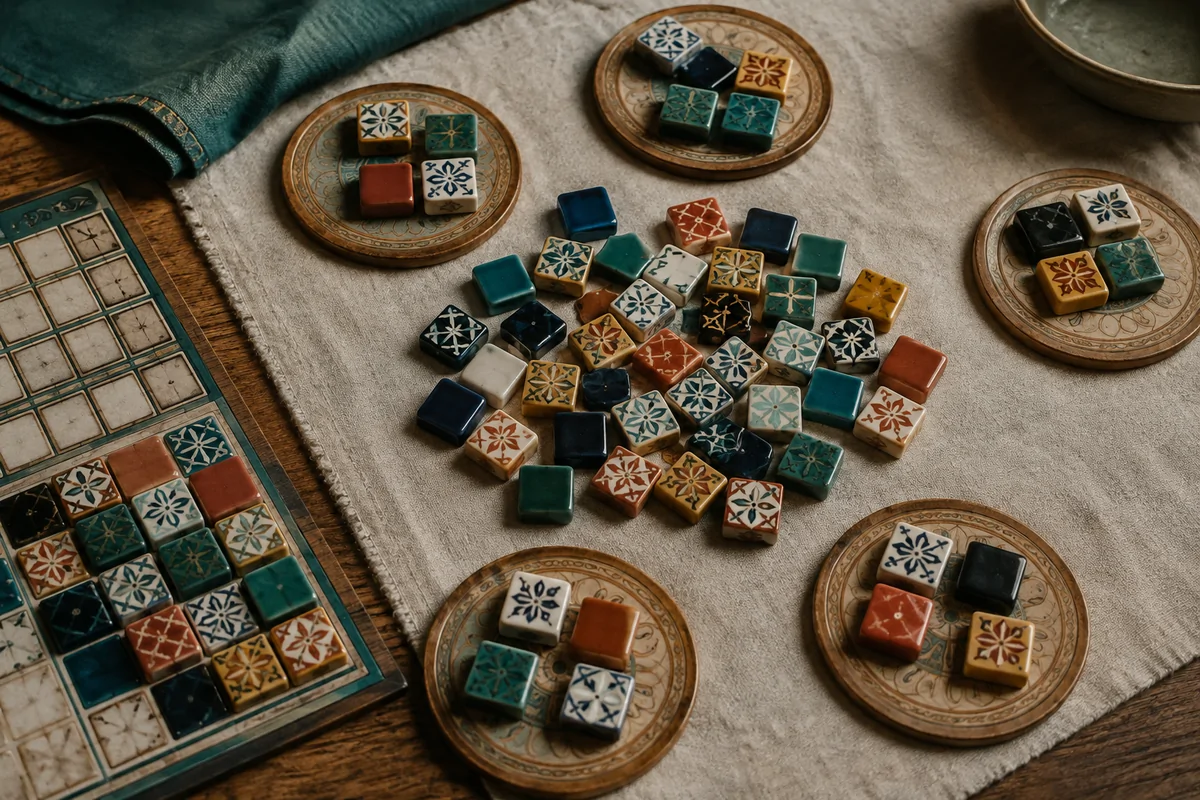
Azul: Pattern, Scarcity, and the Drafting Circle
Azul uses a simple factory display to make every tile color feel social: taking one color sends the rest into a shared middle.
Table Practice
View section → Table Practice
Bohnanza: The Hand You Cannot Rearrange
Bohnanza makes the order of cards in a hand a binding resource, turning planting and trading into negotiations around a sequence that cannot be sorted.
 Table Practice
Jaipur: The Price of Trading from the Market
Jaipur turns a small shared market into a timing problem where taking goods, exchanging cards, and selling a larger lot carry different costs.
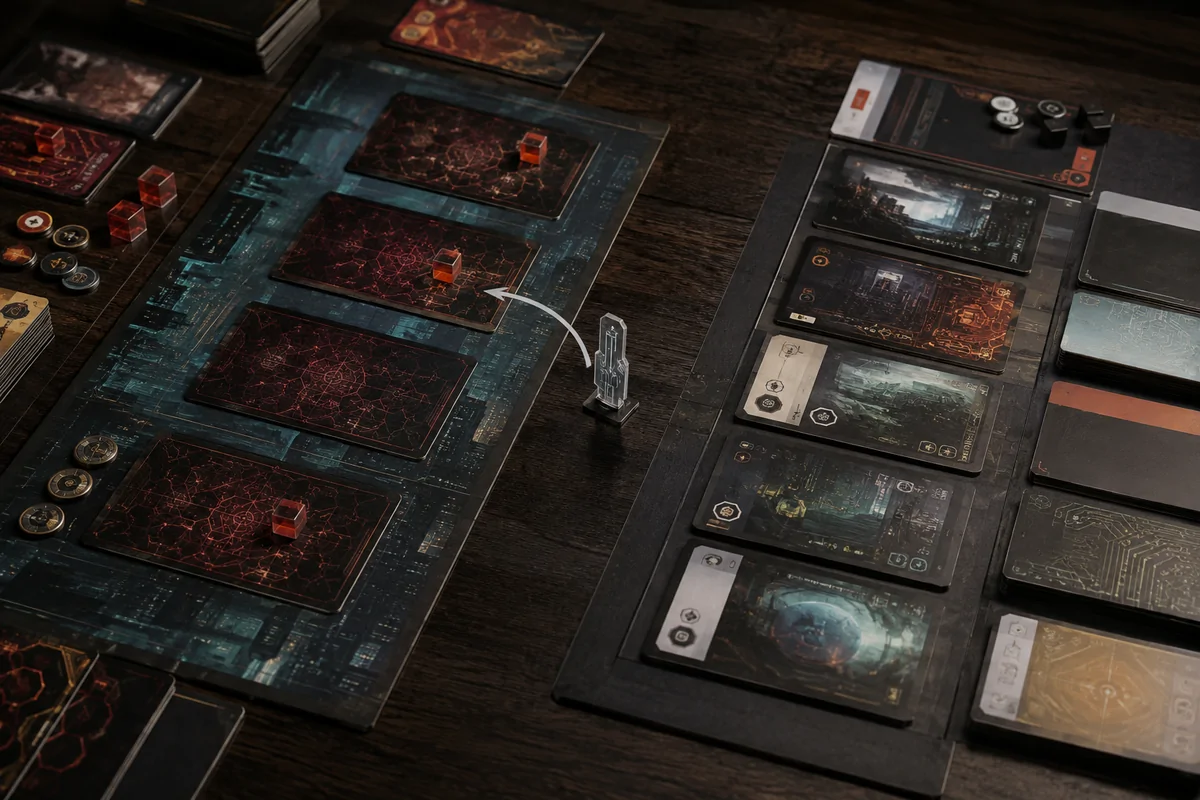 Table Practice
Netrunner: A Run Is a Question Asked of Hidden Information
Netrunner frames an approach to a server as a question: how much does the runner know, and how much must the corporation reveal to answer?
Reading protocol / Editorial standards
How we read the table.
Each field note moves from published material to interpretation, keeping the boundary between the two visible.
Read the full editorial standards- 01
Start with a named source
Each study links a primary rulebook, publisher resource, or institutional document for its factual frame.
- 02
Separate rules from interpretation
The source supports the documented procedure; our account of its effects at a table is editorial analysis.
- 03
Show the limits and process
Each study names the materials behind its factual frame and distinguishes documented rules from editorial interpretation. Readers can consult current primary sources; material corrections are reviewed when warranted.
Material Culture
View section →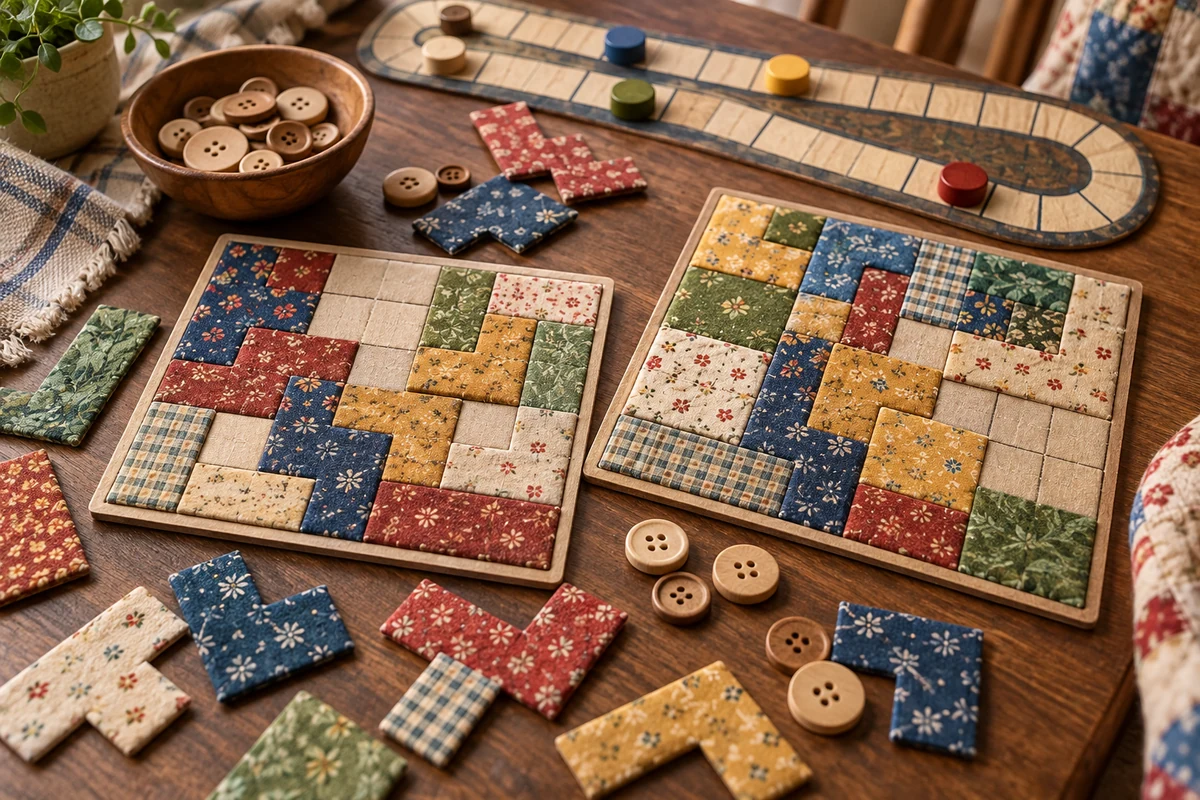 Material Culture
Patchwork: Paying for Space with Time
Patchwork makes a quilt puzzle inseparable from a shared time track, so taking a shape spends buttons and changes who acts next.
 Material Culture
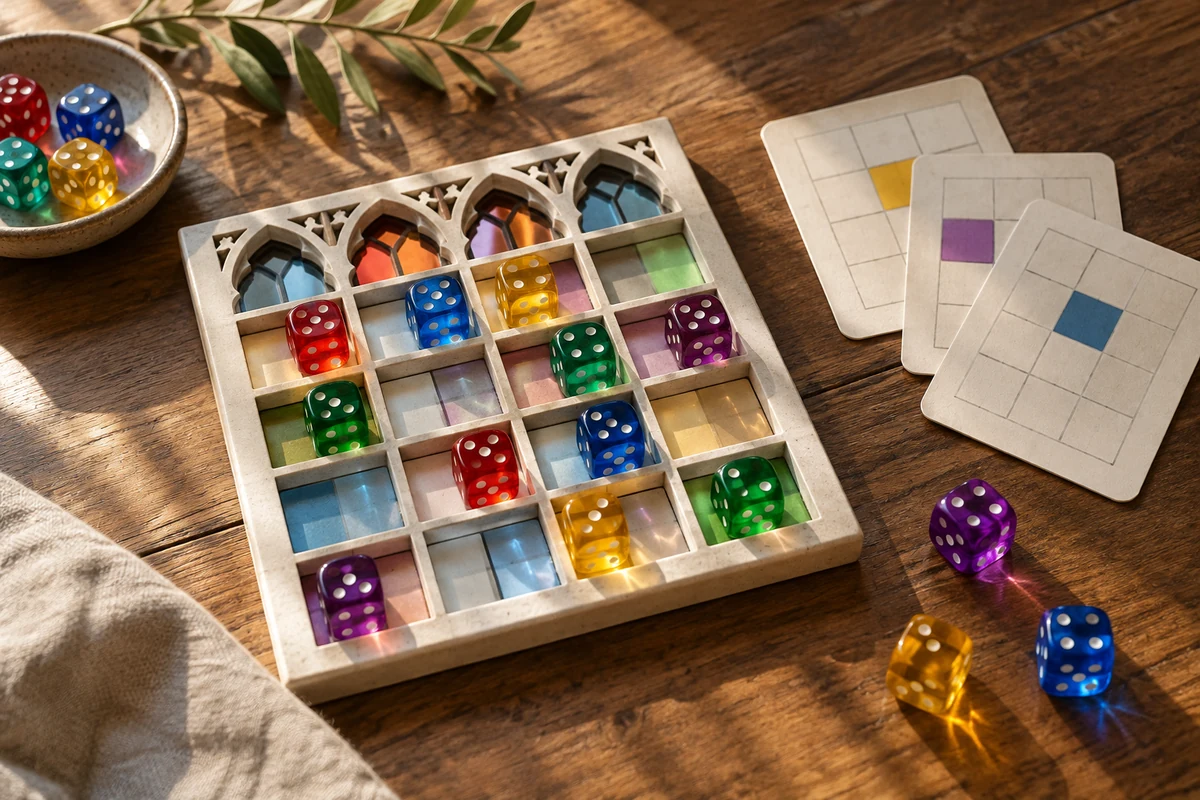
Sagrada: The Window Grid as a Constraint System
Sagrada turns a stained-glass theme into a spatial puzzle where dice color, shade, and placement restrictions meet on a personal window grid.
 Material Culture
Hive: The Board That Emerges from the Pieces
Hive removes the conventional board and asks players to build a connected insect-shaped field whose changing perimeter defines the legal space.
Creator Notes
View section →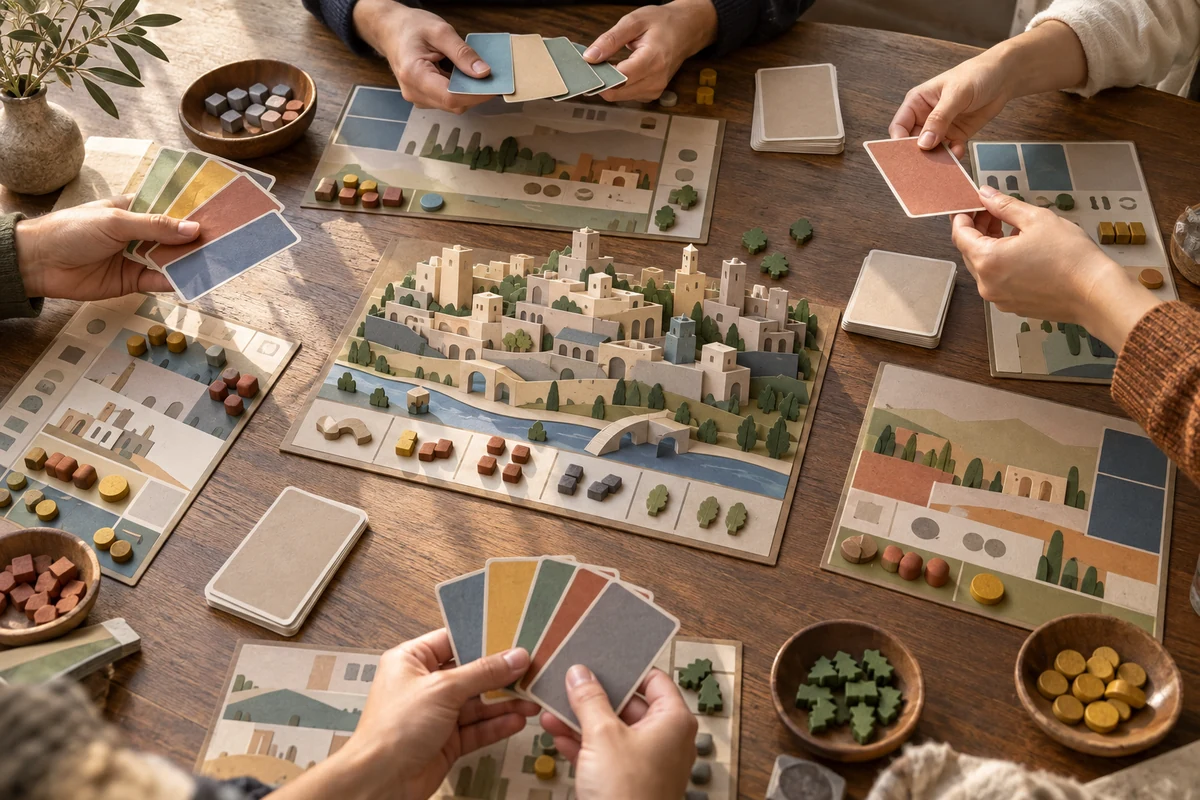 Creator Notes
7 Wonders: Designing a Draft That Moves in Parallel
7 Wonders uses simultaneous card selection and passing hands to make a multi-player civilization game move at a shared pace.
 Creator Notes
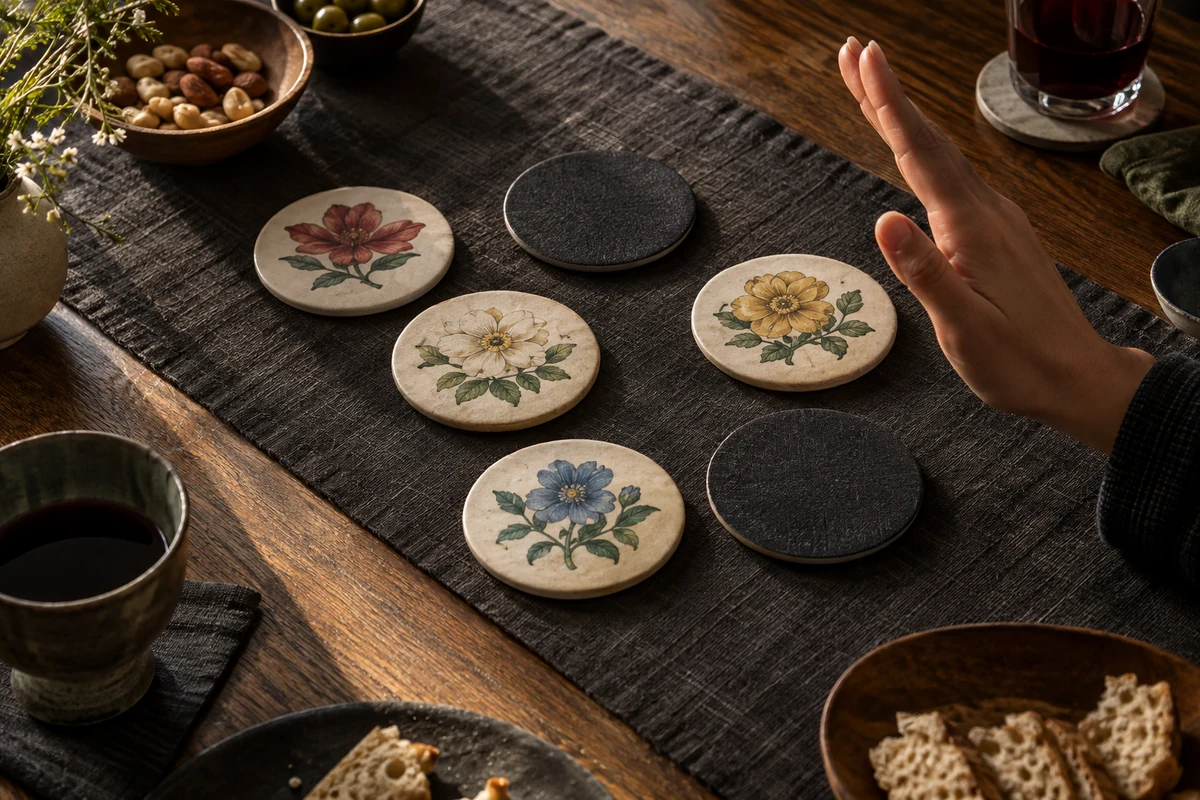
Skull: The Bid Hidden Inside a Flower
Skull places an uncertain bluff inside plain-faced discs, making a player’s public bid depend on objects whose backs reveal almost nothing.
 Creator Notes
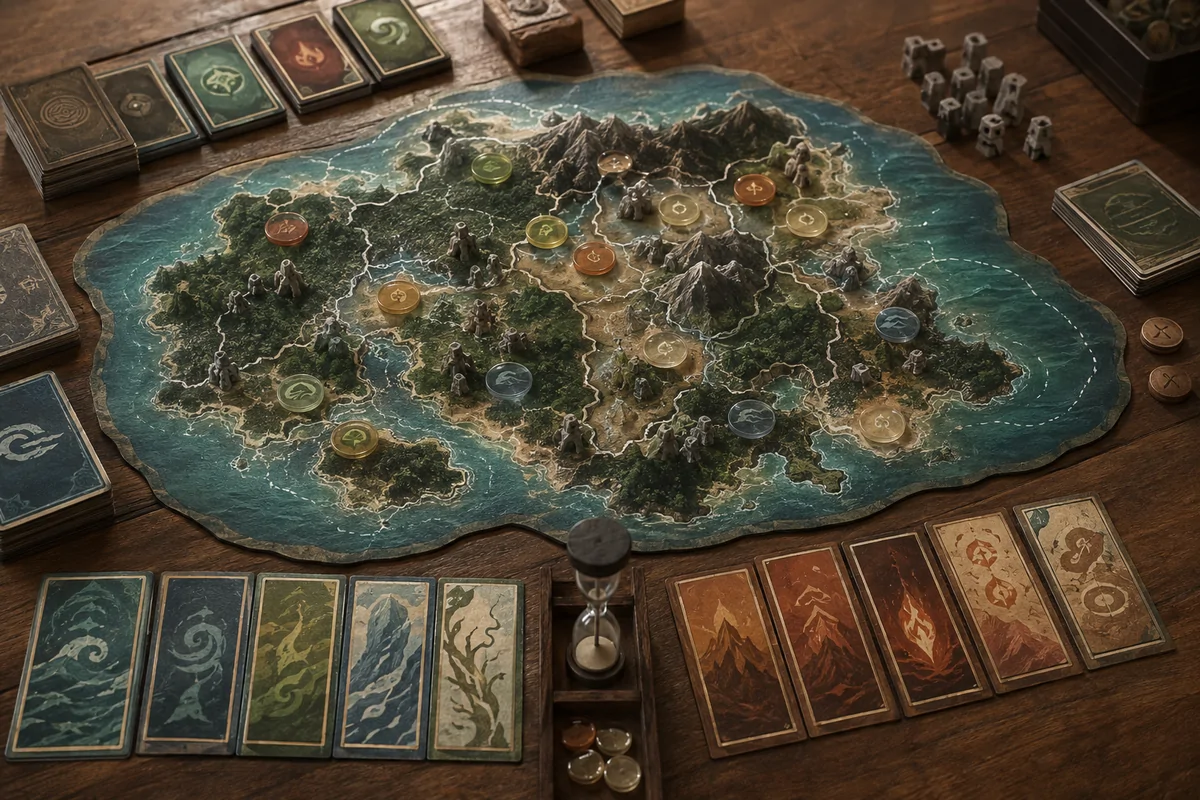
Spirit Island: Slow Powers and Deliberate Coordination
Spirit Island divides powers by speed, inviting a group to coordinate what must happen now and what can be prepared for the next turn.